|
|
 发表于 22-9-2007 10:45 AM
|
显示全部楼层
发表于 22-9-2007 10:45 AM
|
显示全部楼层
接下来,来到第8题.
8. A
--- Stop codons have three types only, i.e. UAA, UAG & UGA.
The complimentary genetic code for the stop codons are ATT, ATC & ACT respectively. As a result, option A is wrong because the codon for ACC is UGG. UGG is a codon no doubt, but it is definitely not a stop codon.
9. A
--- Non-cyclic photophosphrylation in photosynthesis produces ATP, NADPH and CO2.So, A correct. It involves both photosystems, i.e. PS I and PS II.So, B wrong. RuBP involves in Calvin cycle.Thus, C wrong too. This is a process occurs in thylakoid, not stroma of the chloroplast. So, the last choice also wrong.
待续。。。 |
|
|
|
|
|
|
|
|
|
|
|
发表于 22-9-2007 12:53 PM
|
显示全部楼层
哇,我辛苦准备的资料,有没有人爬贴啊?好像没人的?我去休息,回来就看到这个生物专区下沉了哦。 |
|
|
|
|
|
|
|
|
|
|
|
发表于 22-9-2007 01:00 PM
|
显示全部楼层
我对heridity and genetic的题目比较陌生。。 能给一些练习吗??
谢拉。。 |
|
|
|
|
|
|
|
|
|
|
|
发表于 22-9-2007 01:19 PM
|
显示全部楼层
原帖由 小杯子 于 22-9-2007 01:00 PM 发表 
我对heridity and genetic的题目比较陌生。。 能给一些练习吗??
谢拉。。
等我解答完2006年生物试卷1,我就着手放些有关题目上来。 |
|
|
|
|
|
|
|
|
|
|
|
发表于 22-9-2007 04:12 PM
|
显示全部楼层
原帖由 Jec 于 22-9-2007 01:19 PM 发表
等我解答完2006年生物试卷1,我就着手放些有关题目上来。
嗯,好的。。
试卷二的,也麻烦你放上好吗??
不好意思,有点得寸进尺。。
|
|
|
|
|
|
|
|
|
|
|
|
发表于 23-9-2007 08:33 AM
|
显示全部楼层
原帖由 小杯子 于 22-9-2007 04:12 PM 发表
嗯,好的。。
试卷二的,也麻烦你放上好吗??
不好意思,有点得寸进尺。。
要耐心哦! |
|
|
|
|
|
|
|
|
|
|
|
发表于 23-9-2007 10:02 AM
|
显示全部楼层
现在来到第10题。
10.B
--- CAM activates Calvin cycle at night, not C3 and C4 plants. Option C statement is irrelavant, so cannot be the answer. Option D also cannot be accepted because C3 plants produce lower yield, thus it is less efficient in photosynthesis compared to C4 plants.
11. C
--- All are correct except number II. This is one of the parts in the Krebs cycle and it occurs in the matrix of the mitochondrion. By the way, the reaction described in number I is termed as chemiosmosis. ATP synthesis by chemiosmosis uses energy released in the electron transport chain. Oxygen joins with protons to form water.
|
|
|
|
|
|
|
|
|
|
|
|
发表于 23-9-2007 10:03 AM
|
显示全部楼层
12. D
--- In X and Y, these modes of ATP synthesis here are called substrate level phosphorylation. The difference between the two is, X involves electrons carried via NADH in gylcolysis, whereas Y involves electrons carried via NADH and FADH2 in the Krebs cycle. In Z, this mode of ATP synthesis is called oxidative phosphorylation which involves electrons carried via NADH and FADH2 into the electron transport system.
13. D
--- The appropriate nutrition mode is referred as saprophytic. For example: Rhizopus (a saprophyte) grows on decaying food and dead animals/plants. |
|
|
|
|
|
|
|
|
|
|
|
发表于 23-9-2007 10:09 AM
|
显示全部楼层
14. D
--- During respiration, chemoreceptors are stimulated by the level of carbon dioxide in the blood. In fact, the concentration of proton (hydrogen ion) too.
15. C
--- The effects of abscisic acid on a stoma (the opening underneath a leaf):
o [Abscisic acid] increases when the plant faces water stress.
o More water molecules tend to move out from the cytoplasm to the surrounding of the cells.
o Potassium ions are transported out of the guard cells,along with the removal of water.
o The guard cells become flaccid.
o Stomata close when under condition of water stress. |
|
|
|
|
|
|
|
|
|
|
|
发表于 23-9-2007 10:44 AM
|
显示全部楼层
16. A
--- Option number IV cannot be accepted because the accurate answer is excess of carbon dioxide in the mesophyll cells.
Here, let's list out the mechanism of the stomatal closure.
1. Stomatal closure is triggered by water stress.
2. Factors which affect stomatal closure or opening are: temperature, CO2 level in mesophyll and light intensity. When temperature increases or CO2 level in mesophyll increases or light intensity decreases, the stomata close.
3. Abscisic acid (ABA) binds to the receptors at the cell membrane of the guard cells to increase the permeability of Calsium ion channels.
o Ca2+ ions enter the guard cells.
o Ca2+ ions inhibit the proton pumps.
o K+ ions move out of the guard cells into the subsidiary cells.
o Cl- ions also move out of the guard cells.
o Water potential shows a decline in the guard cells.
o Turgor pressure decreases.
o Guard cells become flaccid.
o Stoma closes.
This is the complete description of how stomata close. |
|
|
|
|
|
|
|
|
|
|
|
发表于 23-9-2007 11:07 AM
|
显示全部楼层
是啦,我觉得paper2很难,不知道是否能够替我们解答?
paper 1 也请解答,因为有些我也不会做。谢啦! |
|
|
|
|
|
|
|
|
|
|
|
发表于 23-9-2007 11:12 AM
|
显示全部楼层
17. B
--- This is when we hear the first sound "lub". Aorta carries the oxygenated blood whereas pulmonary arteries carry deoxygenated blood. As a result, the outflows of the oxygenated blood from the aorta and deoxygenated blood from the pulmonary arteries cause the closures of both tricuspid and bicuspid valves. Meanwhile, the semilunar valves in the middle open up to allow these blood to flow into their respective blood vessels with pressure.If the blood flows backwards, it is then restricted to do so by the flipping act of the semilunar valves, thus the "lub" sound is heard. |
|
|
|
|
|
|
|
|
|
|
|
发表于 23-9-2007 11:14 AM
|
显示全部楼层
原帖由 生物难题 于 23-9-2007 11:07 AM 发表
是啦,我觉得paper2很难,不知道是否能够替我们解答?
paper 1 也请解答,因为有些我也不会做。谢啦!
你先做做看。我的答案已将近完成,要post上来,指日可待。要耐心哦... ... |
|
|
|
|
|
|
|
|
|
|
|
发表于 23-9-2007 11:17 AM
|
显示全部楼层
18. C
--- 这道题目简直就是上一题的延伸。  |
|
|
|
|
|
|
|
|
|
|
|
发表于 23-9-2007 11:24 AM
|
显示全部楼层
回复 #131 生物难题 的帖子
谢啦
你的解答真是很全面....! |
|
|
|
|
|
|
|
|
|
|
|
发表于 23-9-2007 12:07 PM
|
显示全部楼层
19. C
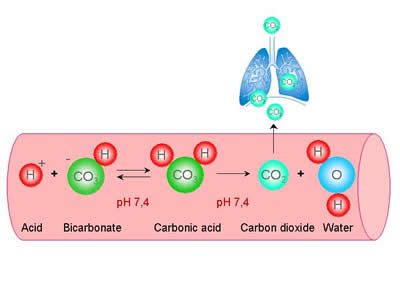
--- About 85% of CO2 emerge as hydrogen carbonate ion (HCO3-) and only 5% remain as carbonic acid (H2CO3).About 10% of CO2 combine with amino group in the protein part of the haemoglobin to form carbaminohaemoglobin.
The most effective buffering component that regulates pH of human blood is of course carbonic acid.
[ 本帖最后由 Jec 于 23-9-2007 06:08 PM 编辑 ] |
|
|
|
|
|
|
|
|
|
|
|
发表于 23-9-2007 12:15 PM
|
显示全部楼层
20. D
--- Option number I : this happens in liver cells.
Option number II : this process is known as glycogenesis. Glycogen is insoluble. Hence, it is good way to be food reserve in animals because it does not participate in metabolic reactions easily.
Option number III: this process is called hyperglycaemia.
Option number IV : this hormone is secreted when there is a low level of blood glucose.
Extra info... 
Other functions of insulin are:
o it inhibits glycogenolysis
o it inhibits gluconeogenesis |
|
|
|
|
|
|
|
|
|
|
|
发表于 23-9-2007 12:23 PM
|
显示全部楼层
21. A
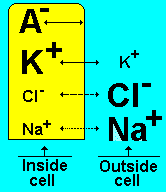
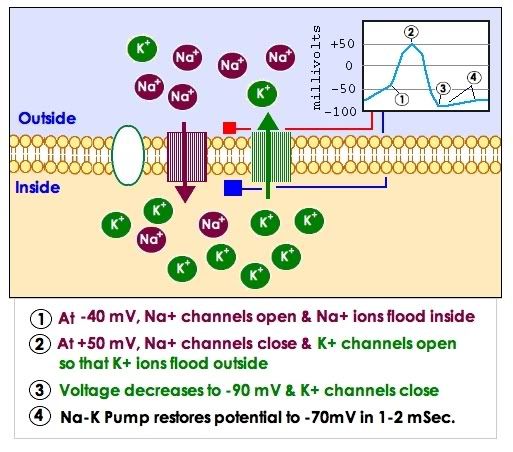
--- In a resting neuron, the facilitated diffusion occurs where 3 sodium ions are pumped in for exchange for 2 potassium ions pumping out.
When a neuron is not sending a signal, it is "at rest." When a neuron is at rest, the inside of the neuron is negative relative to the outside. Although the concentrations of the different ions attempt to balance out on both sides of the membrane, they cannot because the cell membrane allows only some ions to pass through channels (ion channels). At rest, potassium ions (K+) can cross through the membrane easily.
Also at rest, chloride ions (Cl-)and sodium ions (Na+) have a more difficult time crossing. The negatively charged protein molecules (A-) inside the neuron cannot cross the membrane. In addition to these selective ion channels, there is a pump that uses energy to move three sodium ions out of the neuron for every two potassium ions it puts in.
Finally, when all these forces balance out, and the difference in the voltage between the inside and outside of the neuron is measured, you have the resting potential. The resting membrane potential of a neuron is about -70 mV (mV=millivolt) - this means that the inside of the neuron is 70 mV less than the outside. At rest, there are relatively more sodium ions outside the neuron and more potassium ions inside that neuron.
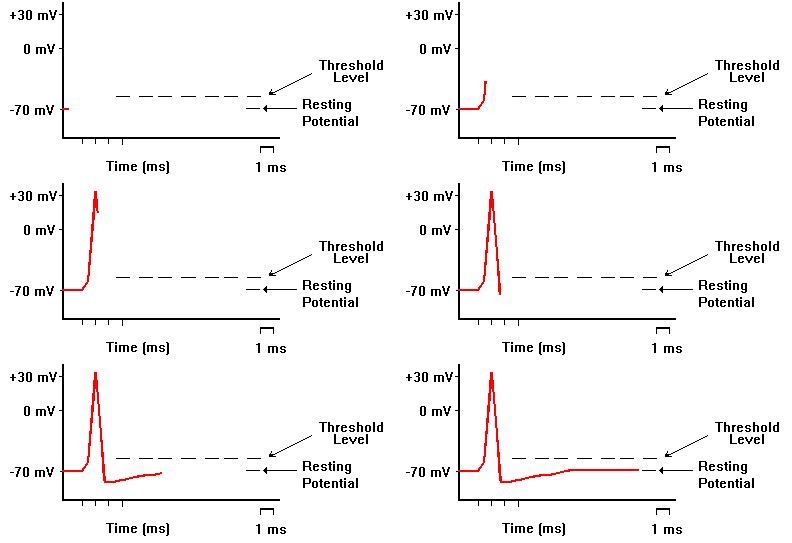
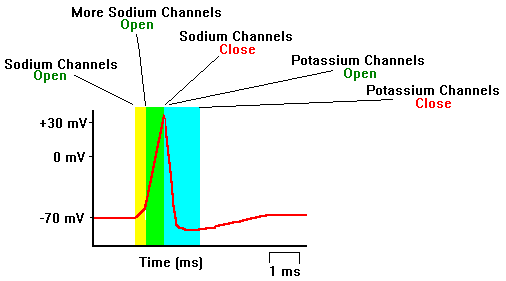
Besides resting neuron, I find this description for the whole process of action potential beneficial too.
[ 本帖最后由 Jec 于 23-9-2007 01:04 PM 编辑 ] |
|
|
|
|
|
|
|
|
|
|
|
发表于 23-9-2007 12:33 PM
|
显示全部楼层
22. A
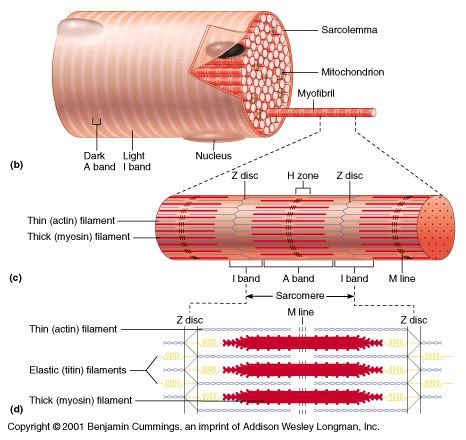
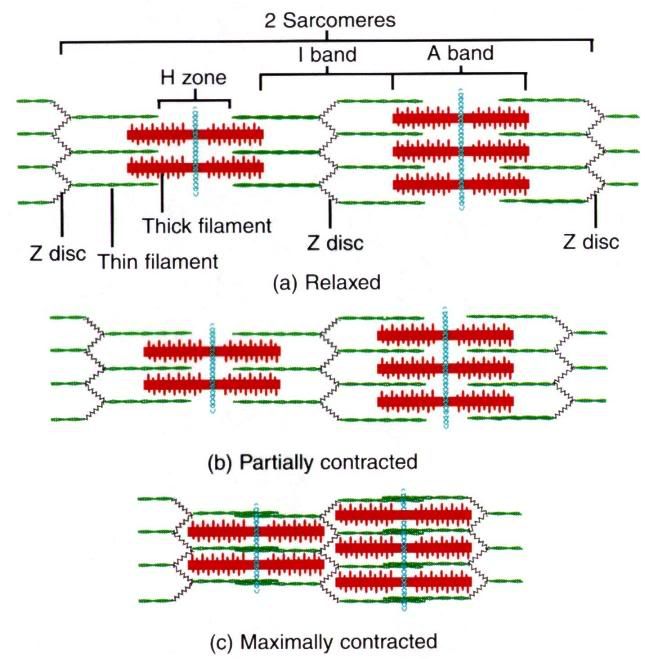
--- When a skeletal muscle contracts, the width of the A band does not change in length. During contractions, the widths of the H zone and I band both decrease.
[ 本帖最后由 Jec 于 23-9-2007 01:04 PM 编辑 ] |
|
|
|
|
|
|
|
|
|
|
|
发表于 23-9-2007 12:44 PM
|
显示全部楼层
原帖由 Jec 于 23-9-2007 08:33 AM 发表
要耐心哦!
好的,谢谢你啦。。 |
|
|
|
|
|
|
|
|
|
| |
 本周最热论坛帖子 本周最热论坛帖子
|











 1241
1241  92
92

